


Here is Robert’s text following the AGE debriefing from 23 July 2026 on the UN Convention. An overview of the current state of affairs:
1. Current situation
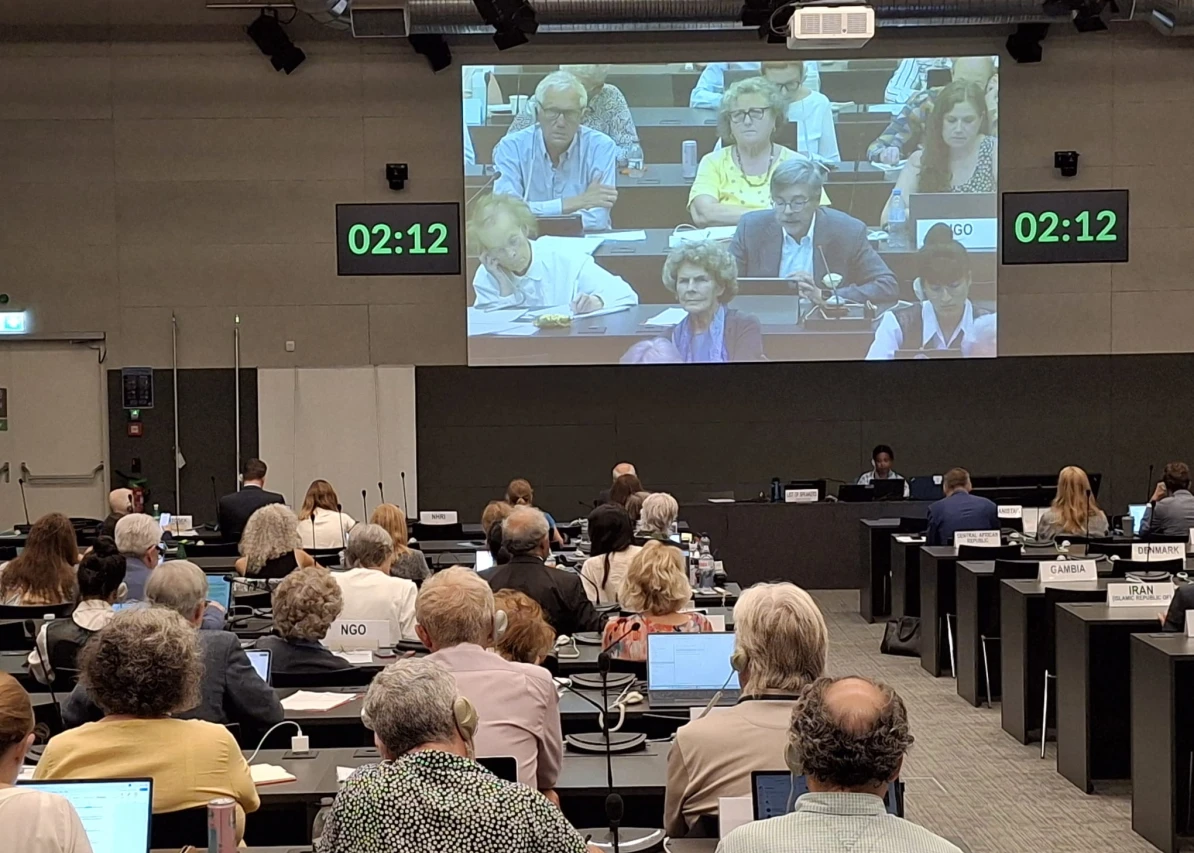
From 13 to 17 July 2026, the first substantive meeting of the Intergovernmental Working Group (IGWG) working on a new legally binding UN instrument on the rights of older persons took place in Geneva. The meeting was an important next step in a process that has been ongoing for more than fifteen years.
There is now broad support for the creation of a legally binding instrument. As a result, the discussion is increasingly less about whether there should be a convention and more about its content, ambition and implementation. The coming period is important, as formal negotiations on a treaty text will not start until November 2027. Until then, the content can still be significantly influenced.
The new convention must build on existing international human rights treaties and standards. In doing so, the aim is to strike a good balance between filling existing gaps and a more comprehensive convention that protects the rights of older people as a whole.
2. Main substantive points of discussion
Monitoring and supervision
One of the main points of discussion is the future monitoring of compliance with the convention. Some states fear additional reporting obligations and financial burdens. Other participants believe that a legally binding instrument is only effective if there is a strong monitoring mechanism. The challenge is to develop a system that is effective and at the same time aligns with existing UN mechanisms. Belgium and Sweden were relatively critical on this point.
Family and care
There is debate about responsibility for the care of the elderly. Some states emphasise the role of family members, while others stress that international human rights treaties primarily impose obligations on states. Changing family structures and the risk of elder abuse also play a role in this.
Definition of ‘older person’
There is still no agreement on the definition of an older person. Some of the participants seem to favour a flexible definition that is not based solely on chronological age; other states see advantages in a clear age limit. The underlying principle is that older people must be able to exercise their rights effectively and on an equal basis.
Non-discrimination, gender and intersectionality
There is broad support for non-discrimination and age equality. At the same time, it is necessary to determine how age limits and age barriers are to be addressed. Attention also needs to be paid to situations where age discrimination coincides with, for example, gender or disability discrimination. The relationship between age and gender in particular can become politically sensitive.
National and cultural context
Some states emphasise the importance of national circumstances, culture and traditions. AGE believes that there can be room for this, but that it should not lead to a weakening of universal human rights standards.
3. Role of older people, civil society and the EU
The involvement of older people and civil society organisations was assessed positively. NGOs were able to actively participate in the meeting and AGE was well represented. However, the participation of African civil society organisations was relatively limited, partly due to financial constraints. This remains a point of concern for the representativeness of the process.
The participation of EU Member States was also strong. According to the unofficial count, 17 EU Member States were physically present. Most countries participated actively and largely aligned with the EU position. Germany and France, which had previously been more cautious, also took a more constructive stance. Belgium and Sweden differed on a few points, especially regarding monitoring.
The EU delegation played an active role. As the process becomes more technical, more expertise from the European Commission and Brussels will be needed. AGE therefore wants to further mobilise the European Commission and strengthen cooperation between the Member States.
4. Further planning
The most important next steps are:
- 26–30 October 2026: second meeting of the IGWG and further substantive elaboration.
- After October 2026: new calls for input and hybrid consultations.
- July 2027: discussion of an outline with the main elements of the convention.
- October 2027: expected first zero draft.
- November 2027: start of formal negotiations on the treaty text.
The period before November 2027 is therefore an important phase for influencing. At the same time, the preparation time between the zero draft and the formal negotiations is limited. Governments and civil society organisations must therefore develop their positions in good time.
5. Opportunities and risks
Opportunities
- broad international support for a legally binding instrument;
- increasing European convergence;
- a more constructive attitude from various Member States;
- active involvement of civil society and older people’s organisations;
- there are still ample opportunities to influence the content before November 2027;
- national consultations as an important means of influencing governments.
Risks
- a treaty that is not ambitious enough;
- a weak monitoring mechanism;
- too much room for national or cultural exceptions;
- too much care responsibility for families;
- political tensions around gender and intersectionality;
- limited geographical representation;
- insufficient preparation time.
6. Priorities for AGE and its members
In the coming period, AGE wants to focus primarily on:
European level
- continuing to mobilise the European Commission;
- strengthening EU coordination;
- promoting cooperation between Member States;
- working towards a possible joint EU negotiating position.
National level
- encourage national consultations;
- unite civil society organisations and organisations for the elderly;
- involve national human rights institutions;
- actively hold governments to account for their efforts.
In terms of content
- further elaborate the definition of ‘older person’;
- analyse existing international and regional standards;
- identify gaps and the potential added value of a new convention;
- develop positions on care, family, monitoring, gender and intersectionality;
- support members with substantive briefings and information.
7. Conclusion
The first substantive meeting of the IGWG marks an important new phase in the development of a UN convention on the rights of older people. There is broad support for a legally binding instrument. The most important questions now concern the specific content and the level of ambition, particularly regarding monitoring, care and family, definitions, discrimination, gender and the relationship between universal rights and the national context.
The coming period offers important opportunities to exert influence before formal negotiations begin in November 2027. This requires timely substantive preparation, strong European cooperation and active national involvement.
For AGE and its members, the priority is therefore to maintain the ambition of the instrument, develop well-founded substantive proposals and actively mobilise European and national governments.





comment article