

26th April 1986 was a Saturday and many of us would have looked forward to a warm spring weekend. I am sure most of us remember what happened over the course of the following week; the panic, the uncertainty, waiting for the radioactive clouds to arrive at our location. The details are all easily accessible online. How many people died because of it?
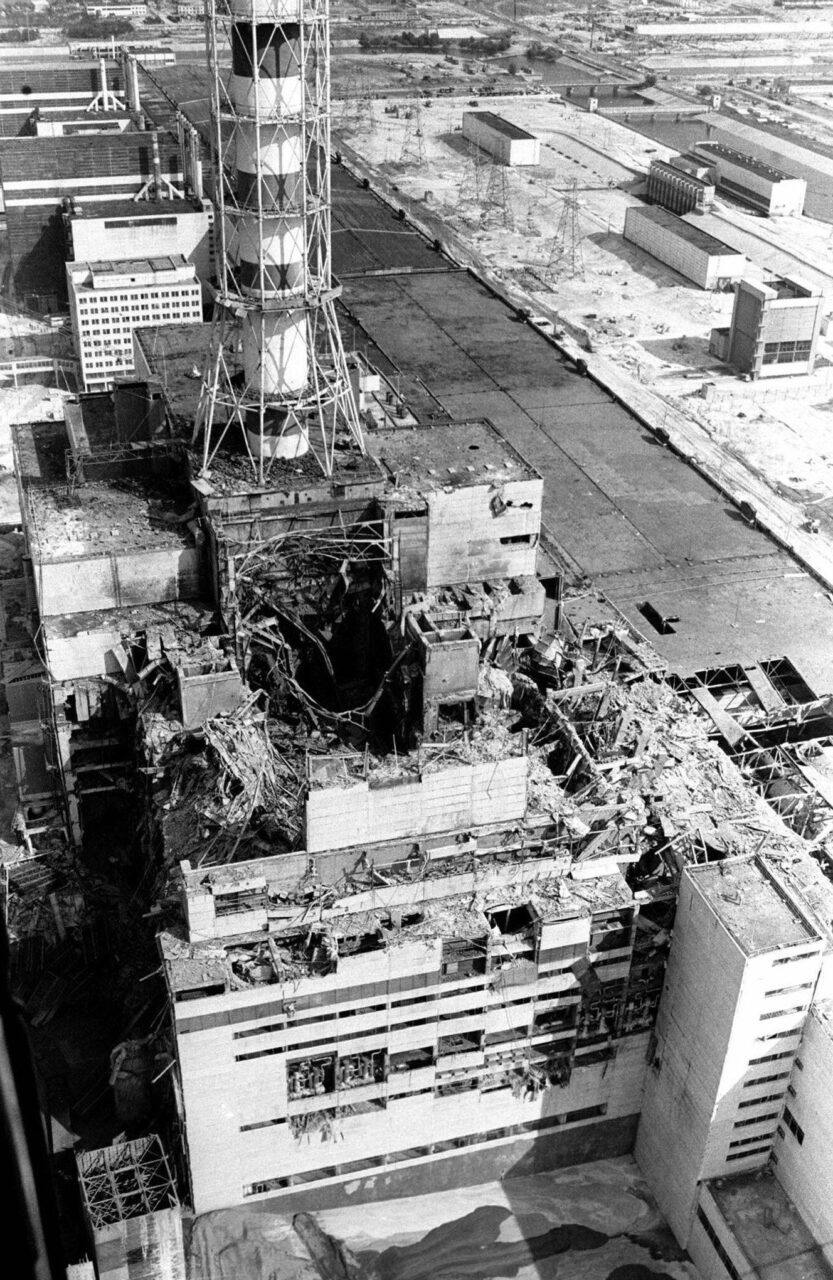
We’ve heard the arguments – it was reckless incompetence and outdated Soviet-style design. It could not happen in modern nuclear power plants.
Really?
Japanese culture values and respects the Spirit of the Ancestors; the generations that came before and left their wisdom. Those ancestors left markers along the coast – do not build below this line – they had experienced earthquakes and tsunamis and left warnings for their descendants to be mindful of the powers of nature. Modern minds, requiring power for their commercial race with the West, thought they knew better. And 15 years ago, the power units used for cooling at the Fukushima nuclear plant, were drowned after the earthquake-related tsunami. We know what happened, well documented and easily accessible.
The argument – not many people died, and it was largely contained.
Really?
‘not many’ is already too many and accidental radiation release at Fukushima of 940 PBq (Peta Becquerel– that is 9.4 x 10 with 17 zeroes – what is a becquerel (measure of radioactivity), what is a milli-sievert (ionizing radiation dose, hitting a human body))? Can we all define without looking anything up, what all this means, including the consequences of a ‘core meltdown’ as it partially and evidently happened? How do we know if and how it might affect human beings? Are we simply relaxing into the soothing statements of the experts, or perhaps the people with an interest to keep things going as they are?
These two incidents are at the top of the ‘nuclear disaster scale’ but there were many more, of significant regional consequences with fatalities – amongst them: Three Mile Island in Pennsylvania, Sellafield in England and more – easily accessible online.
The ‘Precautionary Principle’ will be familiar to those with a background in engineering, logistics and such. Evaluating the effects of the maximum damage that could potentially happen and mitigate against it. Or simply stop and re-evaluate.
What is the absolute worst disastrous catastrophe imaginable with an on-shore/off-shore wind-turbine park, or a solar panel farm? How would it compare to the worst-case scenario with nuclear energy?
‘Into Eternity’ is a 2010 Danish film directed by Michael Madsen (available on YouTube) about the construction of the Onkalo nuclear high-radiation waste depository in Finland. Geology as perfect as human understanding can fathom, technology as perfect as human ingenuity can master. A perfect resting place for the high-radiation waste of nuclear power plants that needs to be kept safe for 100,000 years or more.
Perfect. Really?
The film explores the philosophical question – how to keep this stuff safe? I mean, really, really safe? How do we communicate with civilizations in 100,000 years to warn them not to open this site? The oldest human constructions, in Turkey, are about 11,000 years old – some stone structures, presumably used as temples – but who really knows? The oldest pyramids are less than 5,000 years old, many of them ‘explored’ or ‘robbed’ over the millennia.
So, in 100,000 years a civilization that finally succeeds ours, finds these high-radiation graveyards. They are heavily secured with astonishing materials, unknown to this intrigued civilization. There are numerous symbols all over the place, they look like an unknown ancient, pre-historic language. DO NOT ENTER. DANGER OF DEATH. A skull with crossed bones. What does it all mean? There must be some treasures, let’s try and open it, and find out.
And in this way, we – Homo Sapiens of the 20th/21st century – kill our descendants in the far-distant future. Does this qualify as a ‘worst case scenario’?
(A polemic contribution by Erwin Schaefer, London, member of Green Party of England & Wales, 26th of April, 2026)






comment article