

Text: Daniela Schulz, Hamburg Regional Association of the Greens 60plus
Journées d’été des Écologistes (20–22 August 2026)
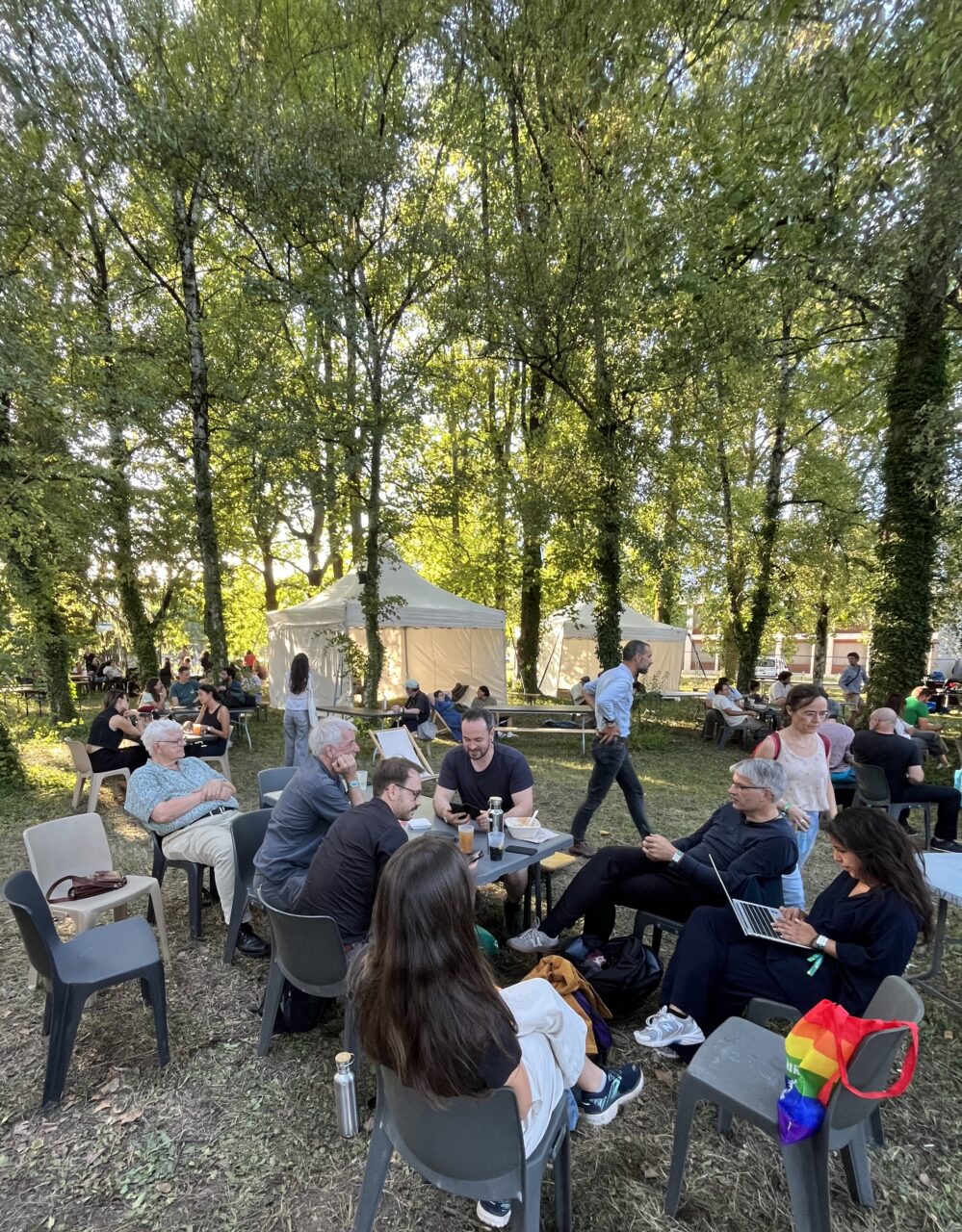
I first heard about the French Greens’ “Summer Gathering” through a newsletter from the German Green Party. The French Greens call themselves Les Écologistes. Sven Giegold, European Affairs Coordinator and former Member of the European Parliament, brought together the party’s Francophiles, French speakers and other European enthusiasts for a friendship visit to the Journées d’été in Grenoble. We were promised three days of insights into French politics through panels, talks and workshops – and, not least, the chance to celebrate together.
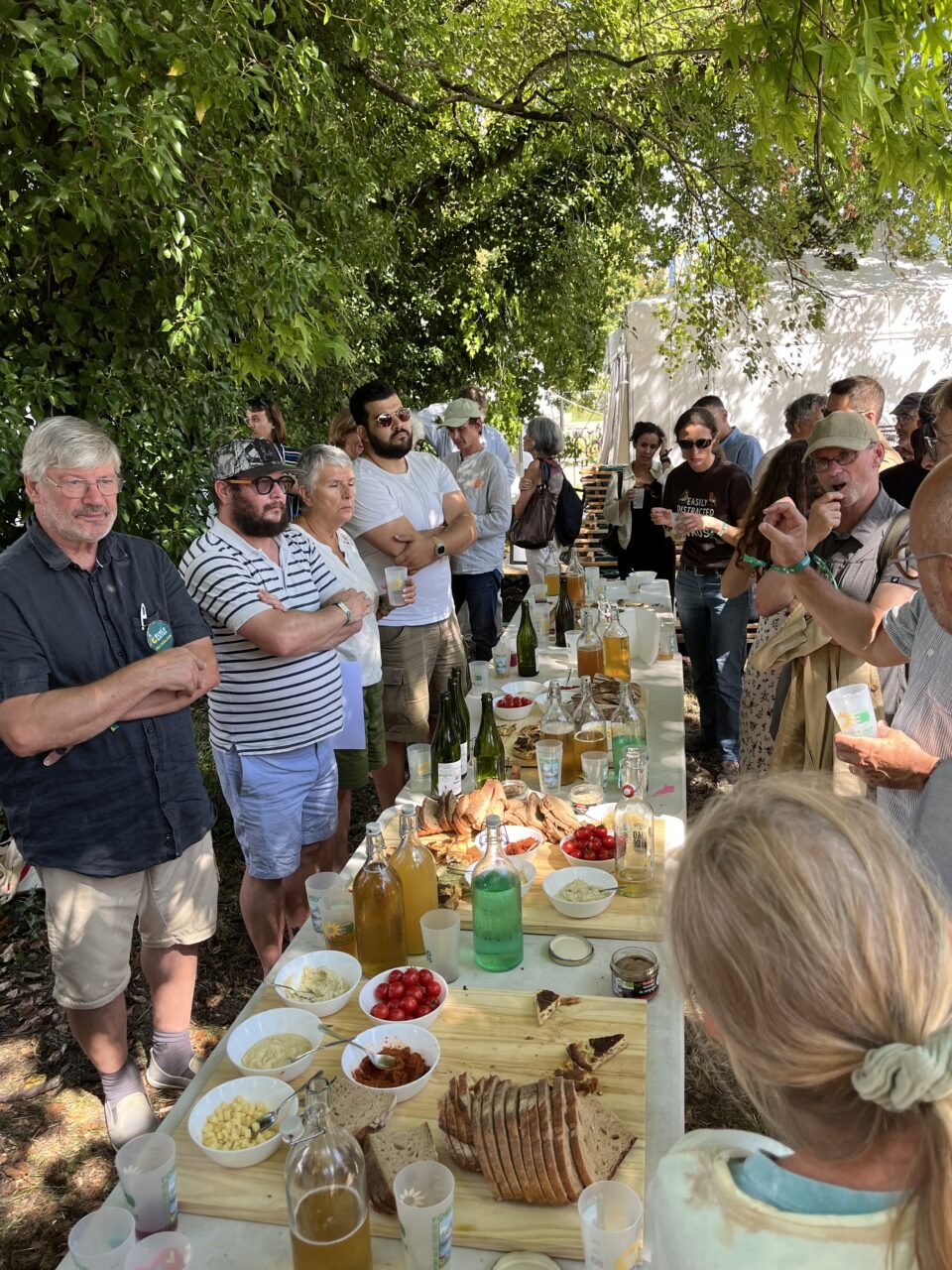
Let me say right away: the promise was definitely kept. The three days were a kind of crash course in the challenges of French politics and some of the tensions within Les Écologistes. But they were also an experience of the openness and warmth of our French neighbours – through conversations and apéros, standing together over small delicacies and drinks, talking and enjoying life.
Grenoble is sometimes described as the “French Freiburg”. It has been governed continuously by Les Écologistes since 2014 and is regarded as a pioneer of Green politics in France. Grenoble adopted a climate plan as early as 2005. The “Capital of the Alps”, as the city also calls itself, has to contend with a challenging geographical location in a valley surrounded by several high Alpine mountain ranges. In summer, the heat becomes trapped there, unable to escape. When I arrived, the thermometer was still showing 38°C in the evening. Fortunately, a few thunderstorms brought some temporary relief over the following days.
As almost all of the roughly fifteen members of the German delegation were staying in a kind of – very comfortable – student hotel, we would meet Sven every morning over croissants and café au lait around a large round table for our daily deep dive into the current situation in our western neighbour. The Summer Gathering took place against the backdrop of the presidential elections due the following spring, and this – alongside the climate crisis – was the dominant political issue.
As in Germany, French society is becoming increasingly polarised. The presidential candidates with the strongest prospects are positioned far towards the political edges: on the far right, Marine Le Pen with the Rassemblement National (RN), and on the far left, Jean-Luc Mélenchon of La France Insoumise (LFI). The centre-left could potentially rally behind the “white knight” Raphaël Glucksmann and his party Place Publique (PP) – at least that is the calculation of leading Green politician Marine Tondelier, who received an ecstatic welcome at the Journées. Tondelier advocates such a centre-left alliance, but whether the various parties on the left will agree to it is anything but certain.
And, of course, the climate crisis was a major topic – a crisis that has hit France particularly hard this year. Firefighters who had been on the front line battling devastating forest fires complained about inadequate equipment. Several of their colleagues had even lost their lives fighting the fires. The anger and grief were palpable. When the audience observed a minute’s silence together in honour of the firefighters who had died, tears rolled down the men’s faces. Despite the risks they face to life and limb, their work is too rarely given the recognition it deserves.
The programme of the Journées was wide-ranging – just as Green politics needs to be. Topics included starting a family as an LGBTQ+ person, discrimination, housing, health, toxic substances in the soil, unaccompanied minor refugees, young people in France’s overseas territories, people with disabilities, children’s biological rhythms, ecological, demographic and social tipping points, and the fight against loneliness, which particularly affects older people but, of course, also the very young.
What strikes me as strange, however, is that despite this impressive diversity, the lives of older people do not appear anywhere as a topic in their own right. I look around the campus of the Université de Grenoble, where part of the Summer Gathering is taking place. Children bustle around their parents or are carried in their arms; the two representatives of the German Green Youth who travelled with us have joined up with the Jeunes Écologistes, the French Green youth organisation. I see many people who would generally be described as “middle-aged”, in their forties and fifties, but also quite a few over 60 – and considerably older.
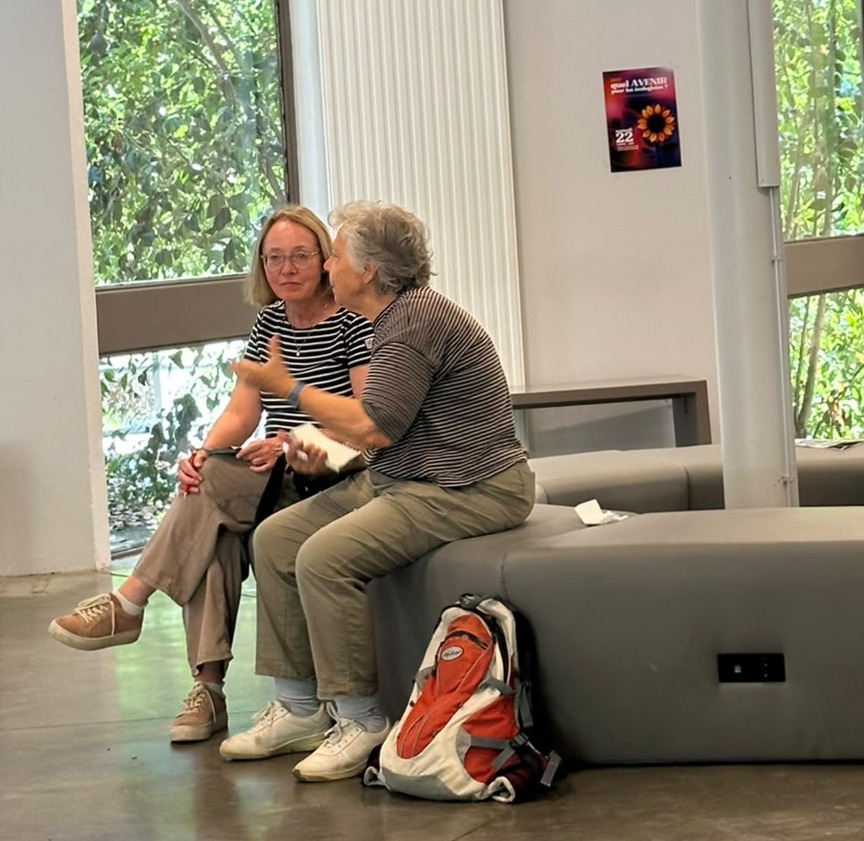
Is there really no group here where they can discuss the particular challenges they face in later life and work to bring about change? I boldly approach a few older participants. My spontaneous mini-survey produces no useful clues – unfortunately, they cannot help me, they reply politely to my decidedly unrepresentative poll.
Eventually, however, I meet Françoise. She is in her late seventies and is active in the organisation CnaV-demain.
The Conseil national autoproclamé de la Vieillesse – the “Self-Proclaimed National Council on Ageing” – was founded five years ago, in the midst of the pandemic. Today, CnaV-demain has 4,000 members and supporters across France, including prominent figures such as theatre and film director Ariane Mnouchkine. The activists meet regularly, organise events and campaign for a more diverse image of what is commonly referred to as “old age”.
Their issues include housing, mobility, participation in culture and society, care homes and, ultimately, the final question of how people want to die. They demand nothing less than meaningful participation in all decisions affecting older people. At the same time, they also want to join forces with younger generations. True to their motto: “Older people have not yet had the last word.”
For anyone wondering about the word demain in the organisation’s name: demain means “tomorrow” and is also part of a play on words involving CNAV (Caisse nationale d’assurance vieillesse), the French national pension insurance system, which, like its German counterpart, is under pressure.
Back to Les Écologistes: on their website, I eventually discover that there is indeed a “Committee on Ageing and Solidarity” (Commission vieillesse et solidarité). Its areas of work are listed very briefly: the rights of older people, social issues, age-friendly environments and conditions in care homes.
The committee can be contacted at: seniors@eelv.fr.





comment article