

02.12.2025 — GroenPlus fighting for quality of life
GroenPlus is the seniors’ network within the Flemish Green party in Belgium. GroenPlus represents the voice of older people within the party and strengthens the Green voice among older people in Flanders. We are actively committed to helping formulate ecological, supportive, and future-oriented answers to the many societal challenges.
Over 35% of the Flemish population is 55 years and older. Older voters already constitute more than 40%. In many Flemish cities and municipalities, older people are the largest voter group.
Our supporters are the generation of ’68 and the ’70s: socially aware, critical, and familiar with the Green ideology. Many are experienced in neighbourhood committees, action groups or unions, the peace movement, or other social movements. They are involved in civil society, often combined with caring for grandchildren or other elderly people. Many local branches of the green party are also supported by active older members.
The aging society confronts us all with unprecedented and intertwining challenges in many areas. From housing to mobility, from child and elderly care to the design of public space, from the organization of labour and social security to the consequences of climate disruption.
The forward-looking Green movement owes it to itself to also see the aging society as a challenge for political mobilization, both substantively and communicatively. Older adults should expect these green perspectives to resonate with their experiences and perceptions, even though this isn’t always self-evident for a movement that primarily sees itself as the voice of younger generations.
GroenPlus sees it as its duty to contribute to this dual mission, by contributing their life experience, time, and energy. Older adults are a powerful source of insight, engagement, and connection across generations.
In recent years, GroenPlus has participated in campaigns against the genocide in Palestine, against the dismantling of public transport, and especially against climate disruption. GroenPlus was one of the founders of the broader Grandparents for the Climate coalition, in which many GroenPlus members are actively involved.
In terms of content, GroenPlus focused primarily on the theme of older people and housing. In the lead-up to our conference (October 2023), we organized study trips, roundtables with experts, and other learning opportunities. The conference resulted in a comprehensive publication that was distributed to local Green officials and civil society organizations.
GroenPlus was involved in the movement for the creation of a UN convention on older people’s rights. In this context, we contributed to the production of two comprehensive scientific publications on the aging population in Flanders.
GroenPlus actively participates in consultations with other older people’s organizations, both at the Flemish and federal levels.
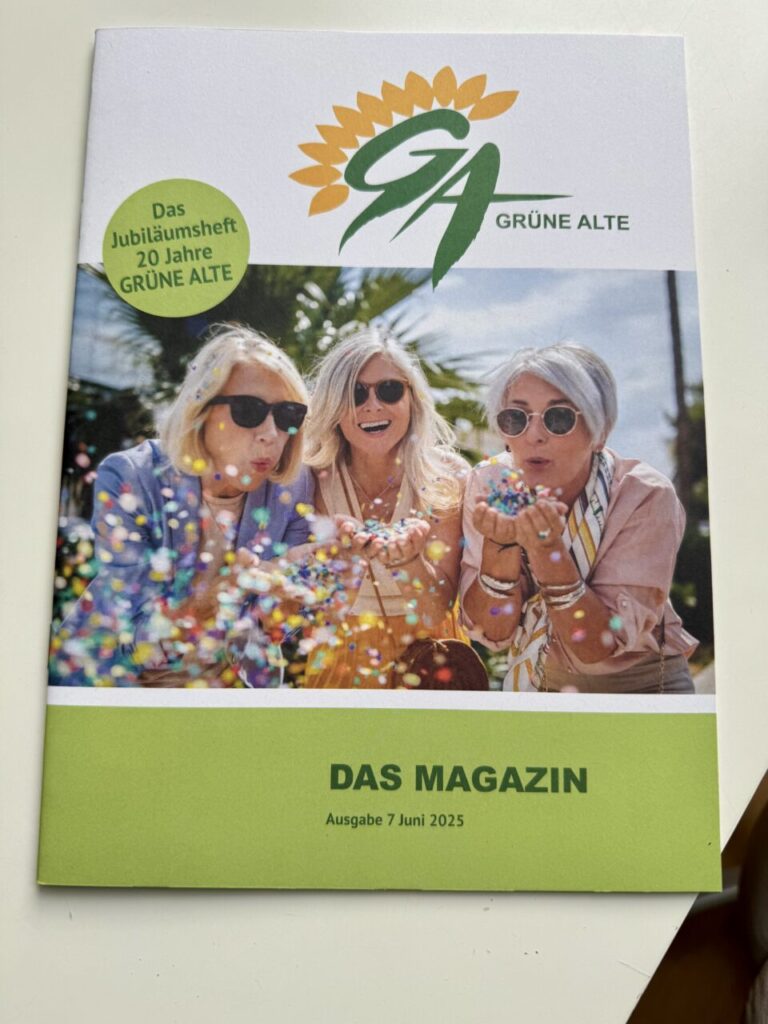
Communication takes place primarily through Facebook (reach 4,000), a monthly newsletter (via email), and a quarterly membership magazine (paper).
Organizationally, Groen’s work is supported by volunteers, with an executive board (7 members), a monthly national board (up to 50 participants), and regional working groups.
In the coming years, GroenPlus will focus on the theme of quality of life. A program involving various colloquia, study sessions, excursions, and other activities is expected to culminate in a conference (fall 2027).
As part of this quality of life program, GroenPlus organized a colloquium on November 14th on the possibility of an alternative well-being index. With keynotes by Patricia Delbaere (Belgian Federal Planning Bureau) on the well-being index, sustainability indicators, and their policy value, and Professor Brent Bleys (Ghent University) on the Index of Sustainable Economic Welfare. This was followed by a panel discussion with representatives from key social movements.
We are also exploring the following subthemes:
- Quality of work. Social participation does not mean that everyone must work in the paid labor market. This one-sidedness leads to social alienation, an increase in bullshit jobs, and the undervaluation of care. We want a fully-fledged role for the social economy, which should not lead to the market, and for public services provided by public services. This theme also touches on the quality of social security.
- Proximity first or being happy in your own neighbourhood. On the livability of the residential environment: the presence of amenities, supplies, care, and meeting places. This theme also touches on mobility.
- Organizing care. On neighbourhood-oriented and preventive care as a permanent task of the community. Making care dependent on the efforts of the social or family network undermines the right to care for everyone: those who are financially strong can purchase care, while financially weaker groups become dependent on lucky chance. How do we intend to organize quality care under these conditions? This theme also touches on the right to equal access to healthcare and the quality of life at the end of life.





comment article